
10 Best Smart Thermostats Reviews & Buyer's Guide | SHR
Abolarin Samuel Jun 12, 2026 12:10 AM
Introducing the ultimate guide for all the tech-savvy homeowners out there - the 10 Best Smart Thermostats Reviews & Buyers Guide. If you're on the lookout for a smart thermostat that will revolutionize the way you control your home's temperature, then look no further. In this comprehensive article, we will delve into the world of the best smart thermostats, exploring their features, benefits, and how they can enhance your overall comfort and energy efficiency. So, whether you're a seasoned smart home enthusiast or just starting to dip your toes into this exciting technology, join us as we uncover the top contenders in the market for the best smart thermostats.
Top Picks
The following selections represent the best smart thermostats based on a balanced evaluation of performance, value, and day-to-day usability. Each option has been assessed for reliability, feature integration, and practical benefits to help streamline climate control in real-world settings.

Source: Amazon
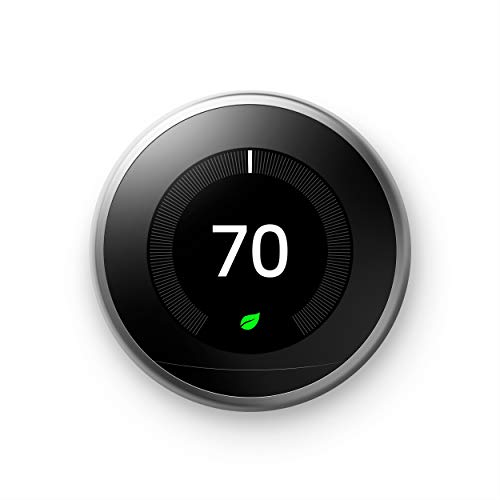
Best Automation: Google Nest Learning Thermostat - Programmable Smart Thermostat
The Google Nest Learning Thermostat T3016US is a Wi-Fi–enabled smart thermostat with a compact 3.3-inch design, built-in sensors, and compatibility with voice assistants like Alexa and Google Assistant. It features Auto-Schedule learning, Home/Away Assist, remote control via the Nest app, and energy tracking through Energy History and the Nest Leaf indicator.
Pros
- Self-learning scheduling
- Broad smart home compatibility
- Remote app control
- Energy usage insights
Cons
- Premium price point
The thermostat stands out for its ability to adapt automatically to user habits, reducing the need for manual programming over time. Its integration with major smart home ecosystems allows seamless voice and app-based control, while Home/Away Assist helps avoid unnecessary energy use when the house is empty. The Energy History feature adds transparency, giving users a clearer understanding of consumption patterns. In everyday use, it balances convenience with efficiency, though the initial setup and higher upfront cost may require consideration.
Users generally appreciate the hands-off scheduling and intuitive interface, noting that it simplifies temperature management after a short learning period. Some users, however, point out that the full value depends on consistent usage patterns and compatibility with existing HVAC systems.
This model is best suited for homeowners seeking a low-maintenance, adaptive thermostat with strong smart home integration.
Best Voice Control: ecobee4 Smart Thermostat with Built-in Alexa
The ecobee4 Smart Thermostat is a Wi-Fi–enabled thermostat with built-in Alexa voice service and an included room sensor for more balanced temperature control. It supports multiple platforms including Apple HomeKit, Google Assistant, SmartThings, and IFTTT, offering flexible integration across smart home ecosystems.
Pros
- Built-in voice assistant
- Included room sensor
- Wide platform compatibility
- Multi-room temperature balancing
Cons
- Larger physical footprint
The ecobee4 distinguishes itself with integrated voice control, allowing users to manage temperature, media, and connected devices directly from the thermostat. The included room sensor improves comfort by addressing temperature variations across different areas, rather than relying on a single reading. Its compatibility with multiple smart home platforms makes it adaptable for mixed-device households. In real-world use, it delivers a combination of convenience and more consistent climate control, though its size may be more noticeable on the wall compared to smaller models.
Users often highlight the usefulness of the room sensor and the convenience of built-in Alexa, especially for hands-free adjustments and smart home commands. Some note that setup and fine-tuning sensor placement can take time to achieve optimal results.
This model is best suited for users who want integrated voice control and more precise temperature management across multiple rooms.
Best Value: Amazon Smart Thermostat – Save money and energy
The Amazon Smart Thermostat is a Wi-Fi–enabled thermostat designed for Alexa integration, requiring a C-wire for installation and offering app-based remote control. It supports automated temperature adjustments, energy-saving features aligned with ENERGY STAR guidelines, and compatibility with Echo devices and Ring for expanded smart home functionality.
Pros
- Affordable smart upgrade
- Alexa automation integration
- ENERGY STAR efficiency
- Guided installation support
Cons
- C-wire requirement
The thermostat focuses on delivering core smart features at a lower cost, making it accessible for users transitioning from traditional models. Alexa integration enables automated temperature changes based on routines such as home, away, and sleep modes, reducing the need for manual adjustments. It also supports remote control through the Alexa app, allowing users to manage settings from anywhere. In practical use, it provides reliable performance for basic climate control needs, though it lacks some of the advanced learning or sensor-driven capabilities found in higher-end models.
Users generally appreciate its straightforward setup and cost efficiency, especially when paired with existing Alexa devices. Some note that functionality is more limited compared to premium thermostats, particularly in customization and advanced automation.
This model is best suited for budget-conscious users seeking simple, voice-enabled smart temperature control within an Alexa ecosystem.
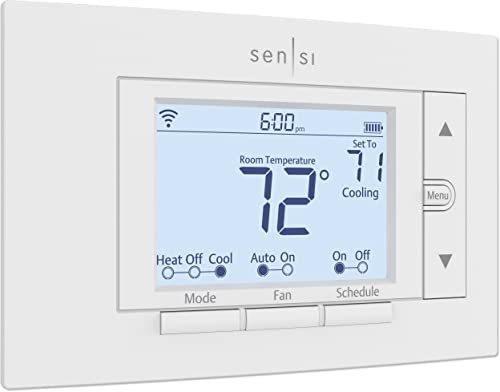
Best Easy Install: Sensi Smart Thermostat, 100 Years Of Expertise
The Sensi Smart Thermostat ST55 is a Wi-Fi–enabled, ENERGY STAR–certified thermostat designed for straightforward DIY installation, often without requiring a C-wire. It offers programmable scheduling, mobile app control, HVAC performance monitoring, and compatibility with Alexa, Google Assistant, and SmartThings.
Pros
- No C-wire flexibility
- Simple DIY installation
- Strong data privacy focus
- HVAC monitoring alerts
Cons
- Basic design interface
The thermostat emphasizes ease of use, from installation to daily operation, making it accessible for users upgrading from traditional systems. Its app-guided setup and built-in level reduce installation friction, while programmable scheduling and remote access support efficient temperature management. Maintenance alerts and usage reports add practical value by helping users monitor system performance over time. In real-world use, it prioritizes reliability and simplicity over advanced automation features found in higher-end models.
Users often value the quick installation process and familiar interface, noting that it integrates smoothly into existing HVAC setups. Some mention that while it performs consistently, it lacks the more advanced learning capabilities and modern display features of premium alternatives.
This model is best suited for homeowners seeking an easy-to-install, privacy-focused smart thermostat with dependable core functionality.
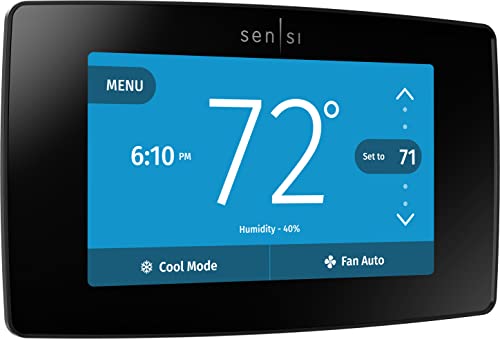
Best Touchscreen: Emerson Sensi Touch Wi-Fi Smart Thermostat
The Emerson Sensi Touch Wi-Fi Thermostat ST75 features a large color touchscreen display with Wi-Fi connectivity and broad compatibility across Alexa, Apple HomeKit, Google Assistant, and SmartThings. It includes geofencing, programmable scheduling, HVAC monitoring, and ENERGY STAR–certified efficiency, though it requires a C-wire for installation.
Pros
- Color touchscreen display
- Wide smart home compatibility
- Geofencing automation
- HVAC maintenance alerts
Cons
- C-wire requirement
The thermostat offers a more modern interface compared to standard models, with a clear touchscreen that simplifies navigation and temperature adjustments. Its geofencing capability helps automate climate control based on user location, while remote access through the mobile app adds flexibility for daily use. Maintenance alerts and usage reports provide practical insights into system performance, supporting long-term efficiency. In real-world settings, it balances user-friendly design with reliable smart features, though installation may be more restrictive due to the C-wire requirement.
Users frequently highlight the responsive touchscreen and clean interface, noting that it feels like a natural upgrade from traditional thermostats. Some mention that while the features are well-rounded, the need for a C-wire and the lack of advanced learning capabilities may be limiting for certain setups.
This model is best suited for users who want a modern touchscreen interface with solid smart features and broad platform compatibility.


- 9.4
- BrandSensi
- 9.2
- BrandSensi
- 9.0
- BrandSensi
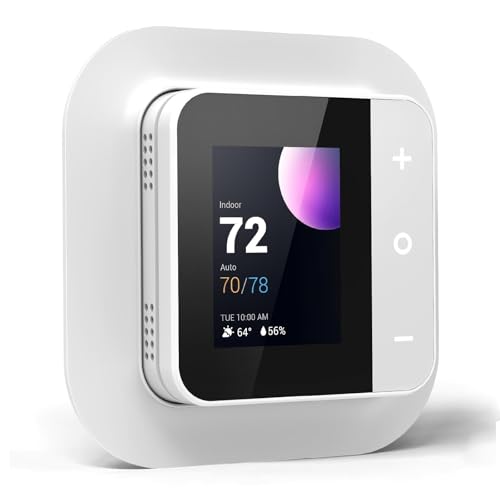
- 8.9
- BrandVINESmartHome
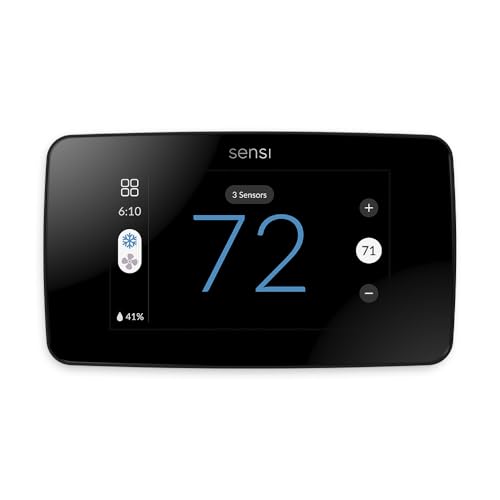
- 8.7
- BrandSensi
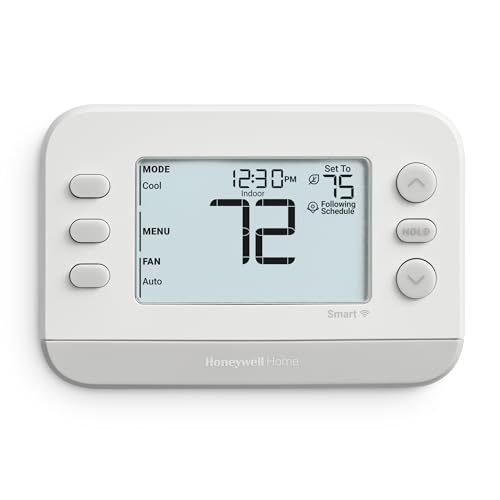
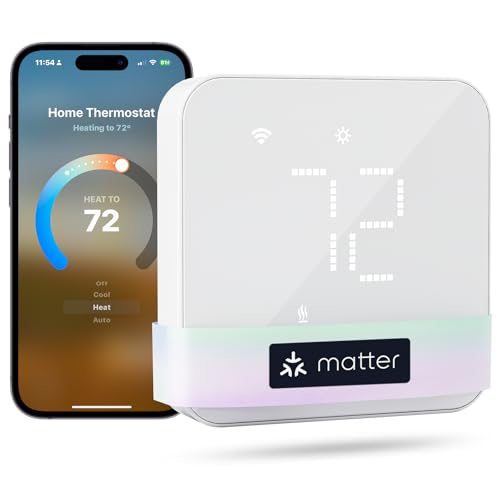
- 8.4
- Brandmeross
Last update on 2026-06-12 / Affiliate links / Images, Product Titles, and Product Highlights from Amazon Product Advertising API
Are smart thermostats effective?
Yes, smart thermostats can be very effective in managing and optimizing home heating and cooling systems. They offer various features and capabilities that traditional thermostats lack, such as remote access, learning algorithms, energy-saving modes, and integration with other smart home devices. By allowing you to control and monitor your thermostat from anywhere and providing advanced scheduling and automation options, smart thermostats can help improve comfort, increase energy efficiency, and reduce heating and cooling costs.
What is the difference between a smart thermostat and a Wi-Fi thermostat?
A smart thermostat and a Wi-Fi thermostat are often used interchangeably, but there can be slight differences in functionality. A Wi-Fi thermostat refers specifically to a thermostat that connects to your home's Wi-Fi network, allowing you to control and monitor it remotely through a smartphone app or web interface. It offers the convenience of remote access and may have basic programmability options.
On the other hand, a smart thermostat typically includes Wi-Fi connectivity but goes beyond basic remote access. Smart thermostats often have additional features such as learning algorithms that adapt to your preferences and schedule, energy-saving modes, voice control capabilities, integration with other smart home devices, and advanced automation options. They provide more advanced functionality and intelligence compared to a basic Wi-Fi thermostat.
Do smart thermostats work without Wi-Fi?
Most smart thermostats require a Wi-Fi connection to fully utilize their features and capabilities, such as remote access, scheduling, and integration with other smart devices. Without Wi-Fi, the thermostat may still function as a traditional thermostat, allowing manual adjustments on the device itself. However, the ability to control and monitor it remotely, receive notifications, or take advantage of advanced features will be limited or unavailable.
How long do smart thermostats last?
The lifespan of a smart thermostat can vary depending on the brand, model, and usage. On average, smart thermostats are designed to last for 5 to 10 years or even longer. However, it's important to note that the technology and features of smart thermostats can evolve over time, and you may choose to upgrade to a newer model with enhanced capabilities. Regular maintenance, such as keeping the thermostat clean and ensuring proper power supply, can also contribute to its longevity.
Read More:
The Best Smart Thermostat of 2026 I SHR
10 Best Smart Home Thermostats - Buyer’s Guide | SHR
10 The Best Smart Thermostat For Zoned Systems Reviews for 2026 | SHR
The Best Smart Thermostat With Humidity Control of 2026 I SHR
10 The Best Smart Thermostat With Room Sensors We've Tested | SHR
Choosing among the best smart thermostats ultimately depends on how much automation, compatibility, and control you want in your home. The models reviewed here reflect a range of priorities, from advanced learning capabilities to straightforward, budget-friendly operation. By weighing features such as installation requirements, smart home integration, and energy-saving tools, you can identify the option that aligns with your household needs. A well-matched thermostat can provide consistent comfort while supporting more efficient day-to-day energy use.

Abolarin Samuel
Abolarin Samuel is a Bachelor of Marketing, he has many good and accurate articles that are highly appreciated by customers, he is funny but extremely serious in his work. He loves to travel and play sports with his friends.









- How to Clean Your Air Conditioner So It Runs Like New All Summer
- Sainlogic SA7 Review: The Best WIFI Smart Weather Station
- Cheap Robot Vacuum and Mop Options for Efficient Home Cleaning
- How to choose a robot vacuum for pet hair
- Ultimate Guide: How to Protect Your Outdoor Security Cameras from Hacks and Vandalism
- How to Maximize Cooling Efficiency with the Best Portable Air Conditioner
- How To Maintain And Clean Your Cooling Fan For Longevity
- How to Fix Smart Switch Won't Connect to Device
- The best smart Wi-Fi router for home
- Guide to cleaning washing machines at home