
10 The Best Interconnected Smoke Alarms We've Tested | SHR
Mike William, Aderin Taiwo Jun 11, 2026 7:33 PM
Best interconnected smoke alarms can make a critical difference when a fire starts in one part of a home while family members are sleeping elsewhere. The challenge is that many models appear similar at first glance, yet they differ significantly in detection technology, installation requirements, backup power options, and how effectively they communicate alerts throughout a property.
Choosing between hardwired and wireless systems, smoke-only versus combination smoke and carbon monoxide protection, and replaceable versus sealed batteries can quickly become confusing. This guide examines 10 interconnected smoke alarm options from brands including SITERLINK, SITERWELL, HEIMAN, Kidde, and X-Sense to help identify which solution best matches different home layouts and safety priorities. Homeowners upgrading their broader security setup may also find value in exploring compact indoor monitoring options.
10 best interconnected smoke alarms

- 9.4
- BrandN/A
- 9.3
- BrandSITERWELL
- 9.0
- BrandSITERWELL
- 8.9
- BrandX-Sense
- 8.6
- BrandN/A
- 8.4
- BrandX-Sense
Last update on 2026-06-11 / Affiliate links / Images, Product Titles, and Product Highlights from Amazon Product Advertising API
Interconnected smoke alarms generally fall into two categories: hardwired systems designed for permanent installation and wireless interconnected models intended for easier deployment. Some products focus solely on smoke detection, while others combine smoke and carbon monoxide monitoring in a single device. Models from Kidde, X-Sense, HEIMAN, SITERLINK, and SITERWELL illustrate how different manufacturers balance installation convenience, coverage, and long-term maintenance.
For homeowners evaluating a complete home safety strategy, it may also be helpful to review outdoor lighting security solutions alongside indoor detection systems.
| Product | Detection Type | Power Source | Interconnection | CO Detection |
|---|---|---|---|---|
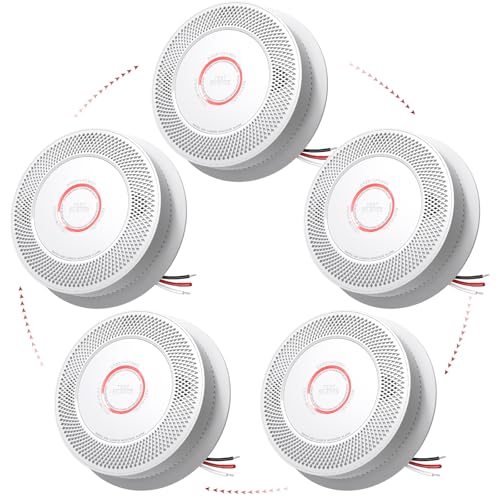
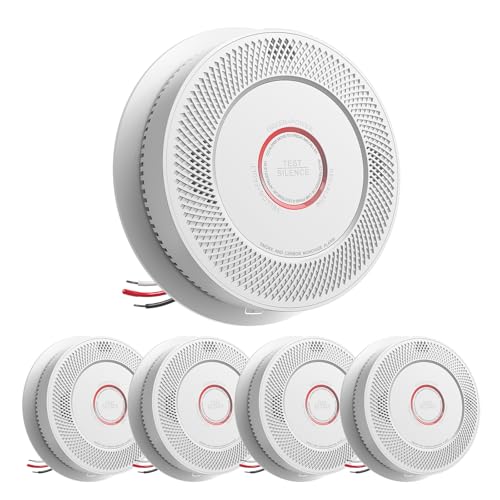
| SITERLINK Smoke & CO Detector 5-Pack | Photoelectric + Electrochemical | Hardwired + AA Backup | Up to 18 Units | Yes |
| SITERWELL GS562A 6-Pack | Photoelectric | Hardwired + 9V Backup | Up to 12 Units | No |
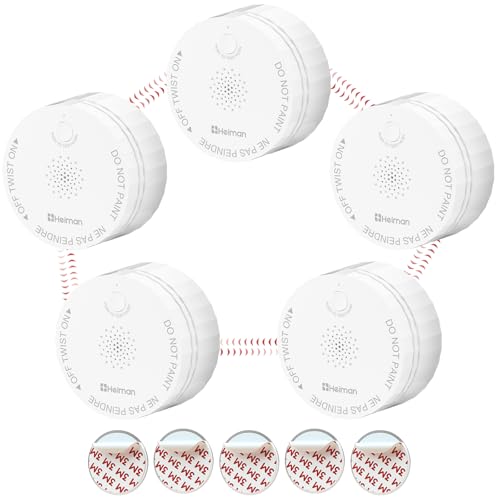
| HEIMAN HM-S1-R 5-Pack | Dual-Beam Photoelectric | Battery Powered | Wireless RF | No |
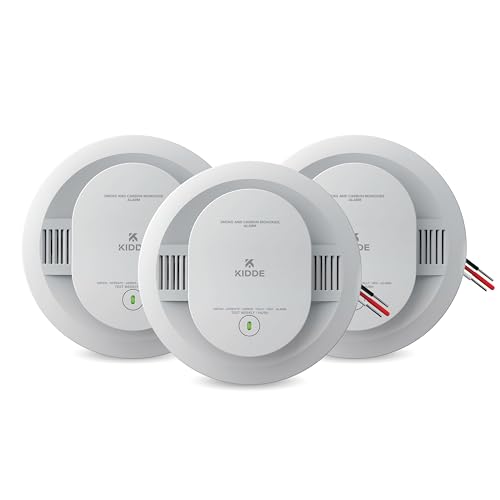
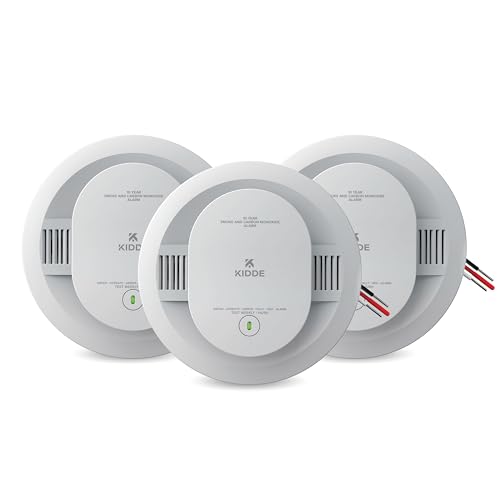
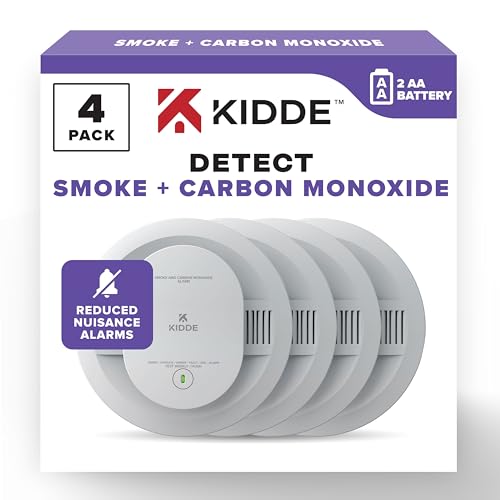
| Kidde 30CUAR 3-Pack | Photoelectric + Electrochemical | Hardwired + AA Backup | Hardwired | Yes |
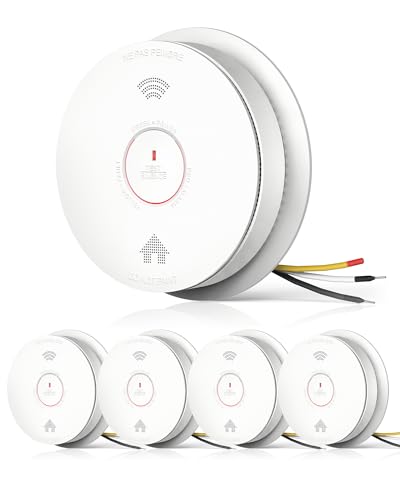
| SITERWELL GS886F 5-Pack | Dual Sensor | Hardwired + AA Backup | Up to 12 Units | Yes |
| SITERWELL A8612B-6AR 5-Pack | Dual Sensor | Hardwired + AA Backup | Up to 18 Units | Yes |
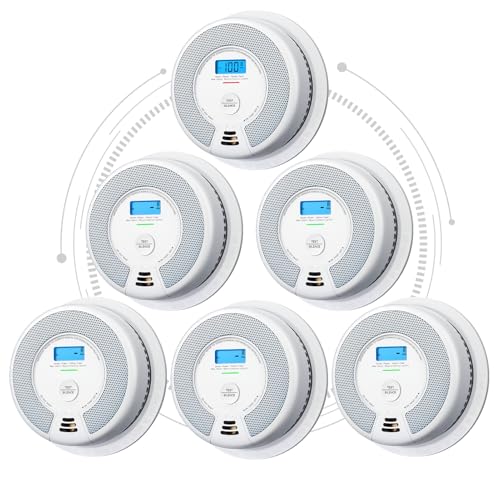
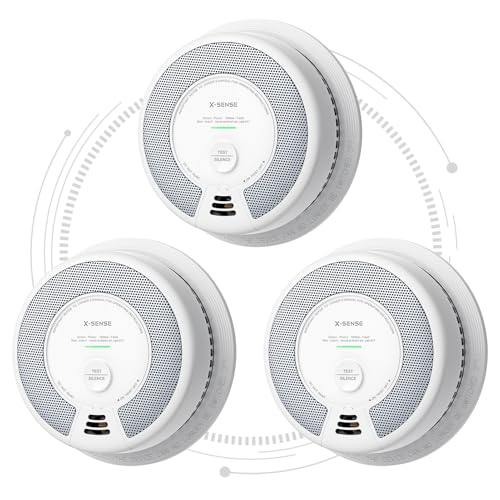
| X-Sense SC07-W 6-Pack | Photoelectric + Electrochemical | 10-Year Sealed Battery | Wireless RF | Yes |
| Kidde 30CUA10 3-Pack | Photoelectric + Electrochemical | Hardwired + 10-Year Backup | Hardwired | Yes |
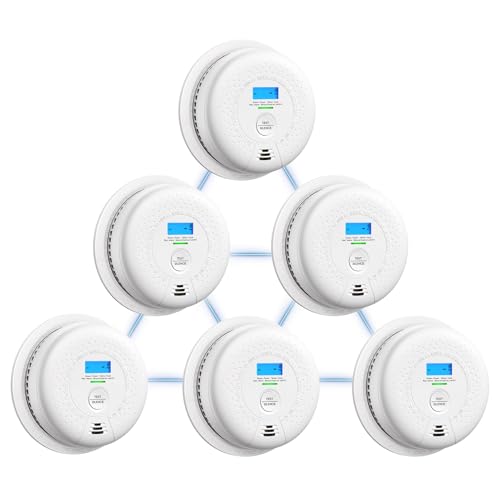
| X-Sense SC01-W 6-Pack | Photoelectric + Electrochemical | 10-Year Sealed Battery | Wireless RF | Yes |
| X-Sense SC06-W 3-Pack | Photoelectric + Electrochemical | 10-Year Sealed Battery | Wireless RF | Yes |
1. HEIMAN HM-S1-R Smoke Alarm
| Pros | Cons |
|---|---|
| Wireless interconnection | Smoke detection only |
| Compact housing | No hardwired option |
| Dual-beam sensor | Limited advanced display features |
| Flexible network grouping | |
| Tool-free installation options | |
| UL 217 certification |
Detailed Review
The HEIMAN HM-S1-R takes a noticeably different approach from many traditional smoke alarms by focusing on simplicity and minimal visual impact. Its compact profile makes it less intrusive on ceilings and walls, while the clean design blends naturally into modern apartments, bedrooms, and smaller living spaces. The included mounting options provide flexibility for users who prefer a straightforward installation process.
In day-to-day use, the wireless interconnection system is one of its strongest qualities. When installed across multiple rooms, the networked alert system helps ensure that an alarm triggered in one area can quickly notify occupants elsewhere in the home. This can be particularly valuable in larger layouts where a single alarm may not be heard clearly from every room.
The dual-beam photoelectric sensor focuses on detecting smoldering fires while reducing nuisance alarms caused by everyday household conditions. Additional flexibility comes from the ability to create separate alarm groups, allowing different areas of a property to operate within customized networks. This level of adaptability is uncommon among compact smoke alarms.
This model is best suited for homeowners, renters, and apartment residents seeking a modern interconnected smoke alarm without wiring requirements. Its combination of small size, wireless networking, and dependable smoke detection creates a convenient ownership experience with minimal installation complexity.
2. Kidde 30CUAR Smoke and Carbon Monoxide Detector
| Pros | Cons |
|---|---|
| Dual-threat detection | Requires hardwired installation |
| Interconnected capability | Less flexible for retrofits |
| AA battery backup | Larger footprint than mini alarms |
| Advanced sensing technology | |
| Current safety compliance | |
| Visual status indicators |
Detailed Review
The Kidde 30CUAR is designed around dependable whole-home protection and follows a familiar hardwired format that many homeowners already use. Its construction feels purpose-built for permanent residential installation, and the integrated status lights make it easy to monitor operational condition without requiring additional accessories or applications.
A major advantage of this model is its ability to monitor both smoke and carbon monoxide within a single device. This approach reduces the need for separate detectors and simplifies placement throughout the home. The interconnected design further strengthens coverage by allowing alerts to propagate across multiple connected units.
Kidde incorporates photoelectric smoke sensing alongside electrochemical carbon monoxide detection, creating a well-rounded safety package. The inclusion of battery backup helps maintain protection during power interruptions, while updated certification standards support long-term compliance with modern residential safety requirements.
This detector is particularly well suited for homeowners replacing aging hardwired alarms or upgrading an existing interconnected network. Users seeking broad protection from both fire and carbon monoxide hazards will likely appreciate its balanced combination of safety features and practical everyday operation.
3. X-Sense SC07-W Smoke and Carbon Monoxide Detector
| Pros | Cons |
|---|---|
| 10-year sealed battery | No hardwired compatibility |
| Wireless interconnection | Display activates only when needed |
| Smoke and CO protection | Larger than compact mini models |
| LCD status display | |
| Maintenance-friendly design | |
| Wide mounting plate |
Detailed Review
The X-Sense SC07-W is built around convenience and long-term ownership simplicity. Its design emphasizes reduced maintenance through the use of a sealed battery system, eliminating the routine battery replacements associated with many traditional alarms. The housing feels substantial without becoming overly bulky, making it suitable for a wide range of residential settings.
Wireless interconnection significantly enhances practical usability. Multiple units can work together to provide whole-home notifications without requiring electrical wiring between devices. This makes the system attractive for retrofit projects where running new cables would add unnecessary cost and complexity.
Beyond interconnected alerts, the detector combines smoke and carbon monoxide monitoring in a single unit. The LCD display provides useful status information when needed, while the large mounting plate can help cover marks left by previous alarms during replacement projects. Together, these features contribute to a more streamlined installation and ownership experience.
This model is an excellent choice for households prioritizing low maintenance and flexible deployment. The combination of wireless networking, dual-threat protection, and a long-life battery makes it especially appealing for homeowners seeking dependable protection with minimal ongoing attention.
Consider how difficult installation will be in your home
Installation requirements often determine whether a project is completed quickly or turns into a larger upgrade. Hardwired models are typically a natural fit for homes that already have compatible wiring in place. Products such as the Kidde 30CUA10 and SITERLINK Smoke & CO Detector can often integrate into existing interconnected alarm networks.
Wireless options such as the HEIMAN HM-S1-R avoid wiring entirely, making them attractive for apartments, rental properties, or older homes where running new electrical connections would be expensive.
Think beyond smoke detection alone
Many buyers focus exclusively on fire detection but overlook carbon monoxide protection. Combination alarms can reduce ceiling clutter while simplifying maintenance because one device handles two safety functions.
The X-Sense SC07-W and Kidde 30CUAR are examples of combination units that monitor both threats. For households with fuel-burning appliances, attached garages, or fireplaces, integrated CO monitoring can provide broader protection without requiring separate devices.
Battery maintenance matters more than most people expect
Traditional backup batteries are familiar and inexpensive to replace, but they require periodic attention. Over several years, battery replacement schedules can become easy to forget.
Models with sealed 10-year batteries, including the X-Sense SC06-W, reduce ongoing maintenance. In contrast, products using replaceable AA or 9V batteries may appeal to homeowners who prefer the ability to replace power sources without replacing the entire unit.
Large homes benefit from stronger network coverage
The primary purpose of interconnected alarms is ensuring everyone hears the alert regardless of where danger originates. Larger properties often benefit from systems capable of linking numerous units across multiple floors.
Some models support networks of 18 or more alarms, while wireless platforms can simplify expansion across detached spaces. Homeowners planning comprehensive security upgrades may also benefit from reviewing motion detection coverage options for exterior areas.
Voice alerts can improve emergency response
A standard siren communicates urgency, but it does not identify the type of threat. Voice alerts can help occupants react faster by distinguishing between smoke and carbon monoxide events.
The SITERLINK Smoke & CO Detector and SITERWELL GS886F provide spoken notifications that may reduce confusion during emergencies, particularly in larger households where multiple occupants need clear instructions.
The best choice depends largely on whether you need combination protection, existing hardwired compatibility, or the simplicity of wireless installation. The following three products stand out for distinct reasons.
Best Overall: SITERLINK Hardwired Smoke and Carbon Monoxide Detector: Combines smoke and carbon monoxide detection with voice alerts and support for large interconnected networks. It offers a balanced mix of coverage, backup protection, and clear emergency communication.
Best Smoke Only: SITERWELL GS562A Smoke Detector: A practical choice for homeowners seeking dedicated smoke detection with hardwired interconnection. The straightforward design and long service life make it suitable for established alarm systems.
Best Wireless: HEIMAN HM-S1-R Smoke Alarm: Ideal for homes where wiring is impractical. The compact design, wireless interconnection, and modern photoelectric detection make installation significantly easier.
For homeowners building a broader smart home ecosystem, reviewing voice control platform choices can help coordinate future connected devices.
Are interconnected smoke alarms worth it?
Yes. When one alarm detects smoke, every connected unit sounds simultaneously. This provides faster awareness throughout the home, especially in multi-story houses where occupants may be far from the source of danger.
Should I choose hardwired or wireless interconnected smoke alarms?
Hardwired systems are often preferred when compatible wiring already exists. Wireless models are usually easier to install in older homes, apartments, and retrofit projects where running new wiring would be difficult.
Do I need carbon monoxide detection built into the alarm?
Many households benefit from combination units because they provide protection from two different hazards using a single device. Homes with fuel-burning appliances, fireplaces, or attached garages should strongly consider combination alarms.
How many interconnected smoke alarms can be connected together?
The number varies by manufacturer and model. Some systems support around 12 units, while others can connect 18 or more alarms across a property. Always verify the maximum supported network size before purchasing.
How long do interconnected smoke alarms typically last?
Many modern units are designed for approximately 10 years of service. Some include sealed batteries intended to last the entire lifespan of the alarm, while others require periodic battery replacement during that period.
Can interconnected smoke alarms be part of a larger home security strategy?
Yes. While smoke alarms focus on life safety, many homeowners combine them with access control and monitoring devices. Those considering a broader upgrade may find it useful to review modern keyless entry solutions as part of an overall home protection plan.

Mike William
Mike William graduated from the University of California, Los Angeles (UCLA) with a major in mechatronics and has 3 years of experience in the field of quality management of smart home products in manufacturing enterprises. Mike William will provide the latest and most accurate information about products to help you make the most suitable choice.









- How to Clean Your Air Conditioner So It Runs Like New All Summer
- Sainlogic SA7 Review: The Best WIFI Smart Weather Station
- Cheap Robot Vacuum and Mop Options for Efficient Home Cleaning
- How to choose a robot vacuum for pet hair
- Ultimate Guide: How to Protect Your Outdoor Security Cameras from Hacks and Vandalism
- How to Maximize Cooling Efficiency with the Best Portable Air Conditioner
- How To Maintain And Clean Your Cooling Fan For Longevity
- How to Fix Smart Switch Won't Connect to Device
- The best smart Wi-Fi router for home
- Guide to cleaning washing machines at home